
Straightening your teeth comes down to one early decision: something fixed to your teeth that does the work for you, or something removable that only works when you wear it. Both get good results. They just suit different mouths, different cases and, honestly, different personalities. This guide walks through what each one actually involves, what they cost, and how to tell which side of the line you fall on.
Quick Comparison
| Fixed braces | Clear aligners | |
|---|---|---|
| Visibility | Visible, though ceramic options are subtler | Barely noticeable |
| Removable | No | Yes, for eating and cleaning |
| Works while you sleep, eat, forget | Yes, always on | Only while worn |
| Best for | Complex crowding, bite correction, large movements | Mild to moderate crowding and spacing |
| Cost at our practice | From $5,500 | See our clear aligners page |
| Typical Australian range | $4,500 to $8,000 for metal | $4,500 to $9,000 |
| Cleaning | Brushing around brackets takes practice | Brush and floss normally |
| Retainer needed after | Yes | Yes |
What Fixed Braces Actually Involve
Fixed braces are brackets bonded to the front of each tooth, joined by a wire. The wire is what moves the teeth; the brackets are just handles. You come in every six to eight weeks so the wire can be adjusted, and each adjustment nudges the teeth a little further along the plan.
The thing that makes braces powerful is also the thing people dislike about them: they are not going anywhere. There is no wear time to get right, no tray to lose in a serviette at lunch. They work continuously from the day they go on. For a teenager who will absolutely lose an aligner tray, or an adult whose bite needs real correction rather than tidying, that reliability is the whole argument.
The trade-off is cleaning and diet. Brushing around brackets takes a bit of technique and a bit longer, and hard or sticky food can pop a bracket off. Neither is a disaster. Both take some getting used to.
What Clear Aligners Actually Involve
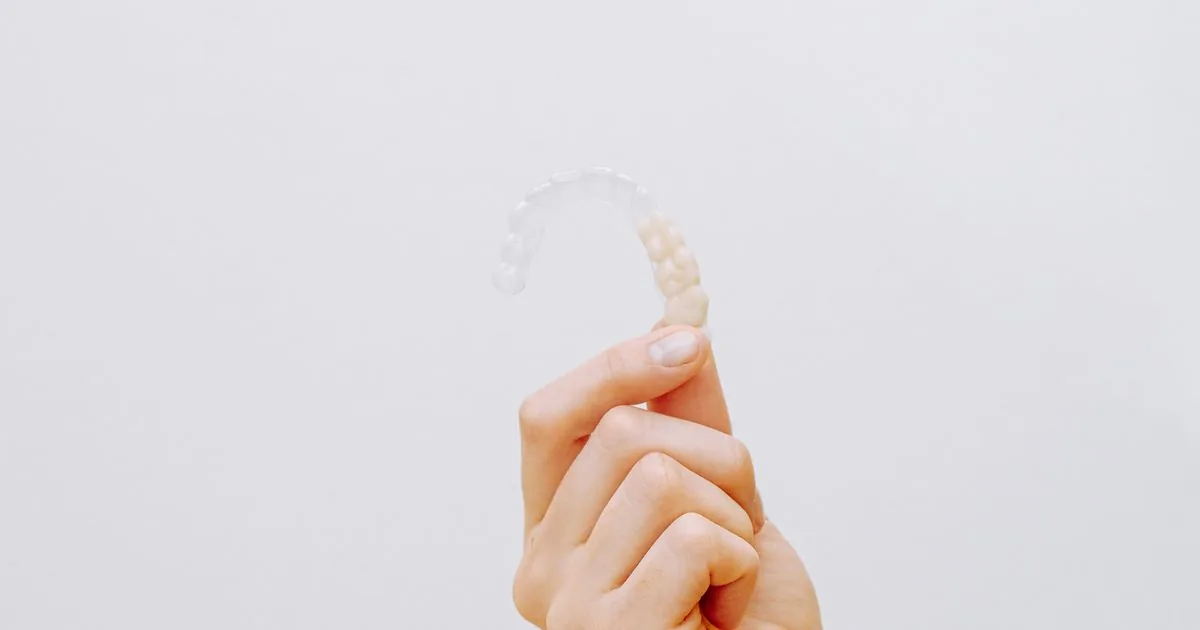
Clear aligners are a series of custom-made plastic trays. Each one is slightly different to the last, and wearing them in sequence walks your teeth towards the planned position. You take them out to eat and to clean your teeth, then put them straight back in.
We provide clear aligner treatment at our Ropes Crossing practice. We do not provide the Invisalign brand specifically, and we mention that plainly because the two words get used interchangeably. The treatment principle is the same and our aligners are a lower-cost option.
The appeal is obvious: most people will not notice you are wearing them, and you eat normally. The catch is equally simple. Aligners work about 20 to 22 hours a day or they do not work to plan. If you are the sort of person who will take them out for a coffee and find them still out at dinner, braces will finish faster even though aligners are theoretically the quicker option.
Cost Comparison
At Serene Family Dental, fixed braces start from $5,500. Clear aligner pricing is on our clear aligners page, and both are quoted properly in writing after an assessment, because a from-price cannot tell you what your particular case needs.
For context, across Australia in 2026 metal braces typically run $4,500 to $8,000, with ceramic braces higher because the material costs more. Clear aligner courses typically run $4,500 to $9,000 depending on complexity. Those are national ranges, not our prices, and specialist orthodontic practices generally sit at the higher end.
Two things worth asking any practice before you commit:
- What is included? A complete quote should cover scans or impressions, every aligner or adjustment, in-treatment reviews and your final retainers. Retainers quoted separately at the end can add $300 to $600 to what you thought you were paying.
- What happens if it needs longer? Cases sometimes need refinement. Find out before you start whether that is included.
Health funds with orthodontic extras cover will contribute, typically against a lifetime limit rather than an annual one. We claim on the spot through HICAPS. Payment plans through Afterpay, humm and Denticare are available, which is how most patients handle treatment of this size.
Which One Suits You?
Choose fixed braces if: your bite needs correcting rather than just your front teeth tidying, your teeth need to move a long way or rotate significantly, you are treating a teenager, or you know yourself well enough to know a removable tray would spend half its life in a drawer.
Choose clear aligners if: your crowding or spacing is mild to moderate, appearance during treatment matters to you, and you will genuinely keep them in. Adults in client-facing work choose them for good reason.
Either could work if: your case sits in the middle. Then it comes down to what you will actually stick with, which only you can answer honestly.
The one thing we would push back on is choosing based on a price difference alone. Finishing with a compromised result because the cheaper option was not the right tool is the most expensive outcome available.
How Long Does Each One Take?
Most cases in both categories run somewhere between 12 and 24 months. Minor front-tooth tidying can finish inside six to nine months. Significant bite correction can run past two years.
What actually drives the timeline is how far the teeth have to travel and how much the bite needs changing, not which appliance you pick. Two people can start on the same day with the same appliance and finish nine months apart because one had straightforward crowding and the other had an underlying bite problem underneath it.
The one timeline difference worth knowing: braces run on a schedule set by your appointments, while aligners run on a schedule set by you. If you wear aligners as prescribed, the plan holds. If wear time slips to 14 hours a day, teeth stop tracking the plan, refinements get added, and a 14-month case becomes a 20-month one. That is not a criticism of aligners. It is just the honest mechanism.
What Most People Ask Before Deciding
Two questions come up in almost every orthodontic consultation we do.
The first is about work and social life, and it is nearly always aligners that win that one. People who present in meetings or work front of house tend to choose aligners even when braces would be marginally faster.
The second is about children and teenagers, and there the answer usually goes the other way. Parents who have already lost a school jumper, a water bottle and a mouthguard in one term tend to reach the same conclusion about a removable tray on their own.
Neither instinct is wrong. Both are really answering the same question: what will you keep up with for the next year and a half?
A Note on Orthodontists
You will see "orthodontist near Penrith" searched a lot, so it is worth being clear about what the word means. An orthodontist is a dentist who has completed further specialist training and holds specialist registration with AHPRA. Our dentists are AHPRA-registered general dentists with additional training in orthodontic treatment, not registered specialists.
In practice that means we treat straightforward and moderate cases, which is most cases. If your assessment shows something that would genuinely be better handled by a specialist, we will say so and refer you rather than take it on. That is a better outcome for you and, frankly, for us.
Serving Penrith and Western Sydney
Our practice is in Ropes Crossing Village, about 8 minutes from Penrith and a short drive from St Marys, Jordan Springs, Kingswood, Mount Druitt, Glenmore Park and Blacktown. Orthodontic treatment means regular visits over a year or more, so being close to home genuinely matters. There is free on-site parking at the door, and we are open six days a week with late weeknight appointments for people who cannot take time off work.
Book an Assessment
The honest answer to "which one is right for me" comes from looking at your teeth, not from an article. An assessment covers what needs to move, which approaches would achieve it, how long each would take and what each would cost in writing.
Book your consultation online, it takes less than two minutes. Or call us on (02) 9053 1995 if you would rather talk it through first. We are happy to answer questions before you commit to anything.