
If you are in Orchard Hills and weighing up a dental implant, the practice is about 7 minutes away. Serene Family Dental is in Ropes Crossing Village, with free parking at the door, and dental implants start from $4,000 including the crown. This guide covers what the treatment actually involves, how long it takes, what it costs and when something simpler would serve you better.
Serving Patients from Orchard Hills
Orchard Hills sits between Penrith and the M4, which means most people assume the nearest implant dentist is somewhere in the Penrith CBD. In practice Ropes Crossing Village is a shorter and quieter run for a lot of the street network out that way, at roughly 7 minutes.
That matters more for implants than for most treatments. This is not a one-appointment job. There is an assessment, the placement, a healing period, then the crown, plus reviews along the way. Six or seven trips over several months is normal. Being close to home, with parking directly outside rather than a paid centre, changes how that feels.
We also see patients from Penrith, Kingswood, Glenmore Park, St Marys, Caddens and Claremont Meadows.
What a Dental Implant Actually Is
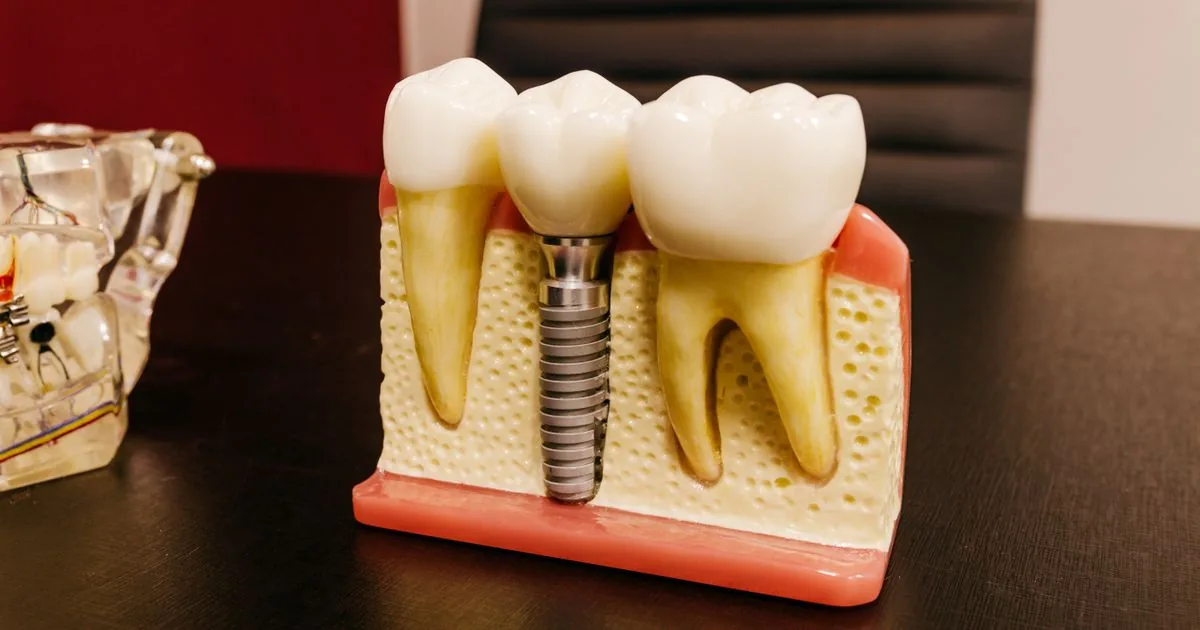
An implant is a small titanium post placed into the jawbone where the root of the missing tooth used to be. The bone grows onto it over a few months, which is what makes it stable. A crown is then attached on top.
That is the part worth understanding: an implant replaces the root, not just the visible tooth. A bridge or a denture sits on top of the gum and leaves the bone underneath unloaded, which is why bone tends to shrink away over the years after a tooth is lost. An implant is the only option that keeps that bone working.
It is also why the treatment takes months rather than weeks. You are waiting on biology, not on a laboratory.
What It Costs
At Serene Family Dental:
- Single implant, crown included: from $4,000
- All-on-4 full-arch treatment: from $25,000 per arch
- Bone grafting, where it is needed, is quoted separately
Across Australia a single implant with crown typically runs $4,500 to $6,500, so our starting price sits below the usual national range. Worth saying why, because a lower number should always prompt the question.
Ours includes the crown. Many quotes do not. They price the implant post, then the abutment, then the crown as separate items, which is how a promising headline figure grows by a couple of thousand dollars before you are finished. We are a suburban family practice rather than a specialist implant centre, so our overheads are lower, and we would rather quote the whole job at the start.
Whoever you end up seeing, ask two questions before you commit:
- Does this figure include the crown?
- What happens to the price if I need a bone graft?
Health funds with major dental cover contribute, though usually well short of the total and often with an annual limit. We claim through HICAPS on the spot, and payment plans through Afterpay, humm and Denticare are available. Full pricing for every service is on our fees page.
How Long It Takes
Most cases run three to six months from placement to final crown. The sequence is usually:
- Assessment and 3D scan. We check bone level, gum health and the position of the nerve and sinus, then quote the whole plan in writing.
- Placement. Done under local anaesthetic, usually about an hour for a single implant. Expect swelling and tenderness for a few days.
- Healing. Three to six months while the bone fuses to the implant. You are not walking around with a gap; we discuss a temporary option at the assessment.
- The crown. Impressions or a scan, then the final crown is fitted and adjusted.
If a bone graft is needed first, add several months before the implant can even go in. That is the most common reason a case runs long, and it is much better to know at the start than to discover it midway.
When an Implant Is Not the Right Answer
We would rather talk you out of treatment than sell it to you, so it is worth being clear about the alternatives.
- A bridge is faster and often cheaper up front, and it can be a good answer when the teeth either side already need crowns. The trade-off is that it involves preparing those neighbouring teeth, and the bone under the gap still shrinks.
- A partial denture is the least expensive and least invasive option. It is removable, which some people never get used to, but it works and it can be a sensible staging step.
- Leaving the gap is a legitimate choice for some back teeth, particularly if the bite is stable and you are not troubled by it.
Implants are also less predictable if you smoke, if you have uncontrolled diabetes, or if gum disease has not been brought under control first. None of those rules it out, but they change the odds, and you deserve to hear that before you spend the money rather than afterwards.
Looking After an Implant
Implants do not decay, which leads people to assume they need less attention than a natural tooth. The opposite is closer to the truth.
The tissue around an implant has a weaker seal than the tissue around a real tooth, so plaque left at the gum line causes trouble faster. Left alone it becomes peri-implantitis, inflammation that eats away the bone holding the implant, and that is the most common reason implants fail years after a successful placement.
The care itself is unremarkable:
- Brush and clean between the teeth daily, including around the implant. We will show you the technique at the fitting.
- Keep your check-ups. We watch the gum level and bone around the implant, where an early change is easy to deal with and a late one is not.
- Wear a night splint if you grind. Grinding puts loads on an implant that a natural tooth would absorb through its ligament. An implant has no ligament, so the force goes straight into the bone and the crown.
- Stop smoking if you can. Smoking is the single biggest risk factor for implant failure, both early and late.
Do that and a well-placed implant commonly lasts decades. The crown on top may need replacing sooner than the implant itself, which is normal and much less involved than starting again.
Why Orchard Hills Patients Choose Us
Our dentists are AHPRA-registered general dentists, and you can look up any Australian practitioner on the AHPRA register yourself. Dr Jathu holds a Postgraduate Diploma in Implantology alongside his dental degree.
We are a family practice rather than an implant-only clinic, which shapes how we approach this. You will get the alternatives explained, a written itemised quote before anything starts, and an honest answer if we think a simpler option would serve you just as well.
We are open six days a week including Saturdays, with late weeknight appointments, and we claim health funds on the spot.
Easy to Get to from Orchard Hills
We are at Unit G4, 80C Ropes Crossing Boulevard, in Ropes Crossing Village. From Orchard Hills it is about 7 minutes by car, with free on-site parking directly outside the practice.
Book an Assessment
Whether an implant is right for you comes down to your bone, your gums and the tooth in question, and that takes an examination and a scan rather than an article to answer properly.
Book your consultation online, it takes less than two minutes. Or call us on (02) 9053 1995 if you would rather ask a few questions first. We are happy to talk it through before you commit to anything.