
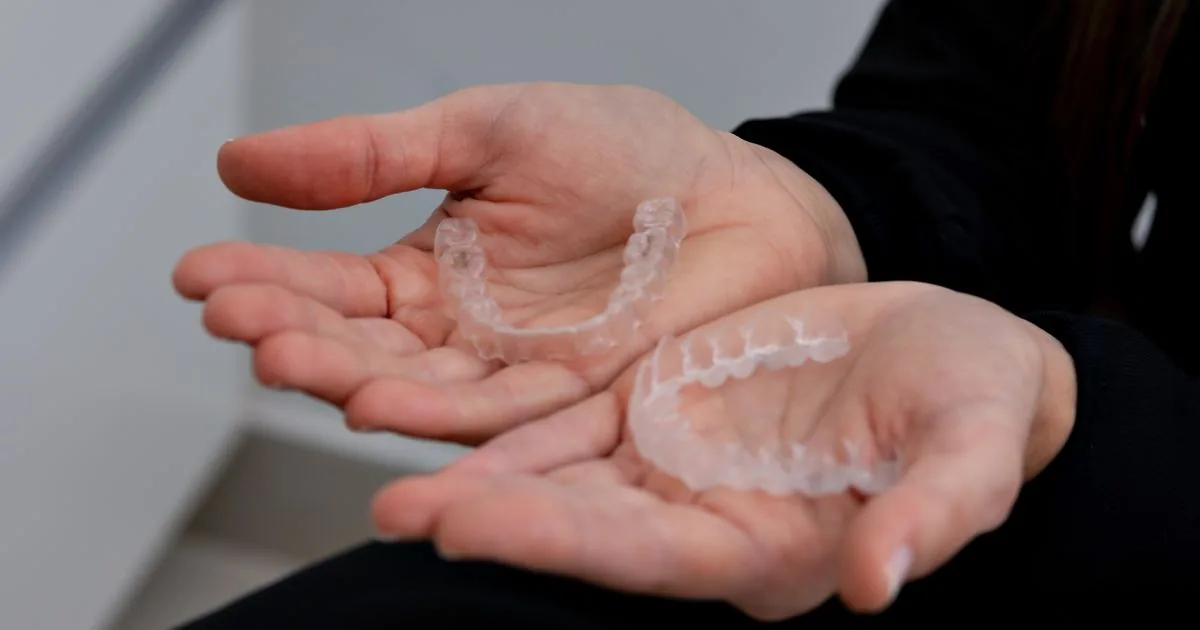
Jordan Springs is about 2 minutes from our practice, which makes us your nearest option for clear aligners by a comfortable margin. A full course starts from $4,500 including retainers.
Two groups tend to ask us about aligners, and they need different advice. Adults whose teeth have shifted since they were teenagers, and parents weighing up aligners against braces for a teenager who is not thrilled about either. This guide covers both honestly, including when aligners are the wrong answer.
Serving Jordan Springs
We are just across Ropes Creek from the Jordan Springs shops, roughly 2 minutes by car, with free parking at the door.
Orthodontic treatment is a long relationship rather than a procedure. You will be coming in for short reviews every several weeks for a year or more. When the practice is two minutes away, that is a detour on the way home. When it is a trip into Penrith with paid parking, people start skipping appointments, and skipped appointments are how treatment drifts past its estimate.
We also treat patients from Ropes Crossing, St Marys, Penrith, Kingswood, Cranebrook and Werrington.
If You Had Braces as a Teenager
This is the most common adult case we see, and it is worth naming because people often assume their situation is unusual.
You had braces at fourteen. Everything was straight. You wore the retainer for a while, then it lived in a drawer, then it did not fit any more, and nobody chased you about it. Ten or fifteen years later the lower front teeth have crowded up again and it bothers you every time you see a photo.
That is relapse, and it is normal rather than a failure on your part. Teeth move throughout life. Without something holding them, they drift back toward where they started.
The good news is that relapse cases are often the easiest thing aligners do. The movement required is usually small, the teeth have been in the right place before, and the course can be considerably shorter and cheaper than a first-time treatment. Some finish inside six to nine months.
The important part is what happens at the end. If the retainer goes in the drawer again, you will be back in the same position in another decade. We would rather set that expectation before you start than have you pay twice.
Aligners for Teenagers
Jordan Springs has a lot of young families, so this comes up constantly, and our answer is not the one that sells the most treatment.
Aligners suit a teenager who is genuinely organised. They are nearly invisible, which matters enormously at that age, and they come out for sport and for eating.
Fixed braces suit a teenager who is not. Aligners work about 20 to 22 hours a day or they do not work to plan. There is no way around that, and no one is supervising it at school. A tray that comes out at lunch and stays out until dinner is a tray that is not moving teeth. Braces do the work whether your child remembers or not.
Parents usually know which category their child falls into. We ask, and we take the answer seriously. If the honest read is that a removable tray would spend half its life in a bag, fixed braces will finish faster and cost less, and we will say so. Our fixed braces start from $5,500.
What Aligners Cost Here
A full course starts from $4,500, and that includes your final retainers. Across Australia a full course typically runs $4,500 to $9,000 depending on complexity.
A complete quote anywhere should cover:
- Scans or impressions at the start
- Every aligner in the series, plus refinements if the case needs them
- Reviews through treatment
- Your final retainers. If these are quoted separately at the end, add $300 to $600 to whatever number you were given at the start
Health funds with orthodontic extras cover contribute, usually against a lifetime limit rather than an annual one, so it is worth checking what you have left before you start. We claim on the spot through HICAPS, and payment plans through Afterpay, humm and Denticare are how most patients handle treatment of this size. Full pricing is on our fees page.
What Living With Aligners Is Actually Like
Nobody explains the daily reality well, and it is the thing that decides whether treatment goes to plan.
They come out to eat. Every time. Not just meals. Coffee with milk, a biscuit at morning tea, anything that is not water. That is the habit people underestimate: it is not one removal a day, it is five or six, and each one needs your teeth brushed or at least rinsed before the trays go back in.
The first two days of each new tray are the tight ones. Each aligner is slightly different to the last, so there is pressure and tenderness as the teeth start moving. It settles quickly. Most people change trays in the evening so they sleep through the worst of it.
You will lisp for a day or two at the start. It passes as your tongue adjusts, and it comes back briefly with the first few trays. Worth knowing if you present or teach for a living.
They need cleaning. Rinsing and brushing the trays gently, not with hot water, which distorts them. A cloudy aligner is a visible one, which defeats the point.
The maths is unforgiving. Twenty-two hours of wear leaves two hours for everything else. A long lunch, a coffee after, dinner out, and you are already over. This is not a reason to avoid aligners. It is a reason to be honest with yourself before you pay for them, because the plan assumes you will do it.
When Aligners Are Not the Right Answer
Aligners handle mild to moderate crowding and spacing very well. They become slower, or stop being the right tool, when:
- The bite itself needs correcting, rather than the front teeth needing tidying
- Teeth need to move a long way or rotate significantly
- The case is genuinely complex, in which case a registered specialist orthodontist may be the better referral, and we will tell you that at the assessment rather than taking it on
It is also worth being clear about who treats you. Our dentists are AHPRA-registered general dentists with further training in orthodontics, not registered specialists. Most straightforward and moderate cases are treated by general dentists. If yours would genuinely be better handled by a specialist, we refer you.
What Happens at the Assessment
The first appointment is not a sales pitch, and nothing is decided on the day.
We look at how your teeth actually meet, not just how the front ones look. A bite that appears fine from the front can be the reason the crowding keeps returning. X-rays show root positions and bone levels, both of which affect what can safely be moved and how quickly.
From there you get an honest read on three things: whether aligners suit your case, roughly how long it would take, and what it would cost in writing. If braces would be the better tool, or the case would genuinely be better with a specialist, we say so then rather than after you have committed.
Most people take the quote home and think about it. Orthodontics is elective treatment spread over a year or more, and it should be a considered decision rather than a same-day one.
Book an Assessment
Whether aligners suit your teeth is a question about your bite, not something an article can answer. An assessment covers what needs to move, how long it would take, what it would cost in writing, and whether something else would serve you better.
Book your consultation online, it takes less than two minutes. Or call (02) 9053 1995 and we will talk it through first. We are two minutes away, so there is very little standing between you and finding out.